
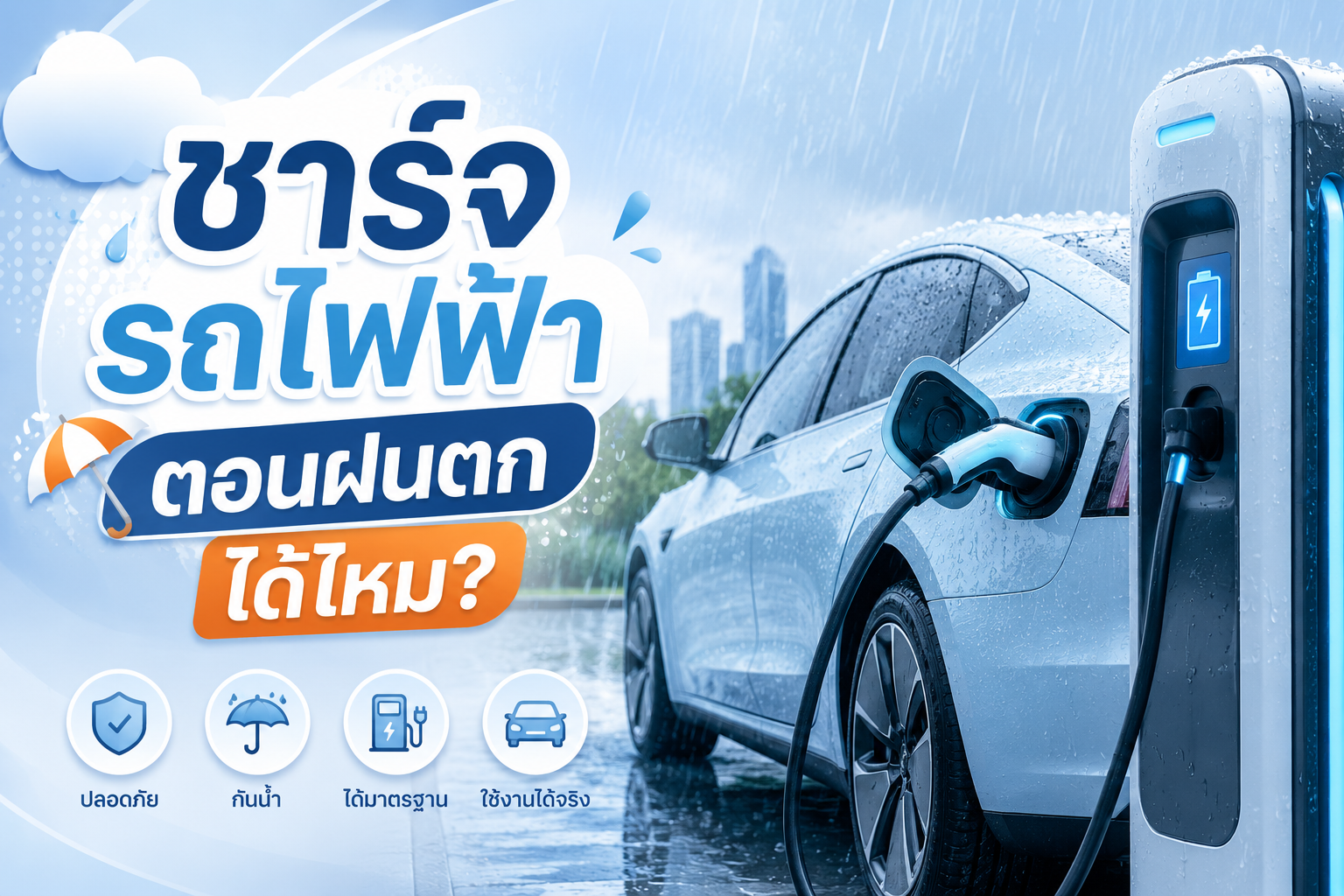
Can You Charge an Electric Car in the Rain? Safety Tips for EV Owners
As electric vehicles (EVs) become more popular in Thailand, many drivers have questions about charging safety, particularly during the rainy season. One of the most common concerns is: Can you charge an electric car in the rain? And what happens if heavy rain begins while your vehicle is already charging? The short answer is yes. Electric cars can generally be charged in normal rainy conditions, provided that the charging equipment is designed for outdoor use, properly installed, and in good working condition.
However, charging during ordinary rainfall is very different from charging in flooded areas or during severe thunderstorms. Understanding these differences is essential for safe EV use. In this guide, KCAR explains how EV charging systems are designed to operate in wet conditions, what precautions drivers should take, and when charging should be avoided.
Can You Charge an Electric Car in the Rain?
Yes, charging an electric vehicle in the rain is generally safe when using suitable equipment and following the manufacturer's instructions. Modern EV charging systems incorporate several safety features, including connection monitoring, electrical protection mechanisms, and components designed to resist water exposure under specified conditions.
However, this does not mean that all charging equipment is waterproof or safe to use in every weather condition. Before charging, drivers should ensure that the charging connector, cable, and vehicle charging port are undamaged and free from standing water or contamination. Charging should be avoided if the equipment is damaged, the charging area is flooded, or severe thunderstorms create additional safety risks.
Why Can Electric Vehicles Be Charged in the Rain?
1. EV Chargers Are Designed with Water Protection
Many EV chargers intended for outdoor installation are designed to resist rain, dust, and moisture. Their protection levels are commonly identified through an Ingress Protection (IP) rating, such as IP54 or IP55, depending on the equipment. However, different components may have different protection ratings. A charger designed to withstand rainfall is not necessarily suitable for immersion in water. Drivers should always follow the specifications and operating instructions provided by the vehicle and charger manufacturers.
2. Charging Systems Check Connections Before Supplying Power
EV charging systems use communication and safety mechanisms to verify that the vehicle and charging equipment are properly connected before charging begins. If certain electrical faults or connection problems are detected, the system may prevent charging from starting or interrupt the power supply. These protections help reduce electrical risks but do not eliminate the need for proper equipment inspection and safe operating practices.
3. Charging Connectors Include Electrical Safety Features
EV charging connectors and vehicle charging ports are designed to work with controlled power delivery systems. Power is supplied only when the necessary operating conditions are satisfied. Nevertheless, drivers should never touch electrical contacts inside charging connectors or attempt to use equipment showing signs of damage, contamination, or water accumulation.
4. Many Public EV Charging Stations Support Outdoor Use
Public EV charging stations installed outdoors generally use equipment intended for exposure to normal weather conditions. However, drivers should inspect the surrounding area before charging, particularly during heavy rain. If there is standing water around the charging equipment, visible cable damage, or signs of electrical faults, the station should not be used until it has been inspected by the operator.
6 Essential EV Charging Safety Tips During Rainy Weather
1. Inspect the Charging Cable and Connector
Before charging, check the charging connector, cable, and vehicle charging port for visible damage. Look for cracked insulation, exposed wiring, burn marks, loose components, or foreign objects. If any damage is detected, avoid using the equipment and contact the charging station operator or a qualified technician.
2. Keep Your Hands Dry When Handling Charging Equipment
Although suitable charging equipment can be used in rainy conditions, it is advisable to keep your hands dry when connecting or disconnecting the charger. Never touch electrical contacts inside the connector. If water has entered the electrical contact area, do not attempt to connect the charger. Follow the manufacturer's instructions and arrange an inspection if necessary.
3. Never Charge an EV in Flooded Areas
Charging an electric vehicle in a flooded location can create serious electrical hazards. Avoid charging where floodwater may reach the charging station, electrical outlets, cables, or other electrical components. If charging equipment has been submerged or exposed to flooding, do not touch or operate it. Contact the charging station operator or a qualified electrical professional before using it again. During Thailand's rainy season, drivers should also be aware of flood risks when parking or travelling. For additional vehicle safety information, read KCAR's guide to what to do if your car stalls in floodwater.
4. Use Properly Installed and Certified Charging Equipment
For home EV charging, choose equipment that is suitable for your vehicle and intended installation environment. Installation should be carried out by a qualified electrical professional who understands EV charging requirements. Appropriate electrical protection devices should be installed in accordance with applicable standards and manufacturer specifications.
5. Avoid Extension Cords and Modified Charging Equipment
Do not use ordinary extension cords, unapproved adapters, or modified electrical connections to charge an electric vehicle. Improper equipment may increase the risk of overheating, electrical faults, and fire. Always use charging accessories approved for your vehicle and charging system.
6. Avoid Handling Outdoor Chargers During Thunderstorms
While normal rainfall does not necessarily prevent safe EV charging, thunderstorms introduce additional hazards, particularly lightning. Avoid starting a charging session or handling outdoor electrical equipment during an active thunderstorm. If a thunderstorm begins while your vehicle is charging, avoid approaching or touching outdoor charging equipment until conditions are safe. Follow the manufacturer's guidance and any instructions provided by the charging station operator.
What Should You Do If Heavy Rain Starts While Your EV Is Charging?
If rain begins while your electric vehicle is charging, there is generally no need to disconnect the charger immediately, provided that the equipment is suitable for outdoor use and the charging area remains safe. However, you should take additional precautions if you notice:
-
Floodwater accumulating around the charging station
-
Error messages or electrical fault warnings
-
Smoke, burning smells, or unusual noises
-
Damaged or loose charging cables
-
Thunderstorms or nearby lightning
If the charging equipment shows signs of malfunction, stop charging using the appropriate safe procedure. If flooding or electrical hazards are present, do not touch the charger or attempt to disconnect it manually. Contact the charging station operator or emergency services as appropriate.
Is It Safe to Charge an EV at Home During Rainy Weather?
Home EV charging can be safe during rainy weather when the charger is properly installed and designed for its operating environment. For outdoor home charging installations, several factors should be considered:
-
The charger must have a suitable water protection rating.
-
Electrical protection devices must meet applicable requirements.
-
The charging point should be located away from flood-prone areas.
-
Charging cables and connectors must remain in good condition.
-
The system should be inspected and maintained according to the manufacturer's instructions.
If your property is vulnerable to flooding, consult a qualified installer before selecting a charging location.
Frequently Asked Questions About EV Charging in the Rain
• Can you get an electric shock while charging an EV in the rain?
Properly designed and installed EV charging systems include safety mechanisms intended to reduce electrical hazards. However, electric shock risks may still exist if equipment is damaged, improperly installed, flooded, or used incorrectly.
• Can an EV charging connector get wet?
Some charging connectors are designed to withstand normal rain exposure under specified conditions. However, water should not be allowed to accumulate inside electrical contact areas. If water enters the connector, avoid using it until the equipment has been checked according to the manufacturer's instructions.
• Can you charge an electric car outdoors?
Yes, provided the charging equipment is designed for outdoor use and installed correctly. Charging should be avoided in flooded areas or when the equipment is damaged.
• Should you stop charging an EV during heavy rain?
Not necessarily. Normal rainfall may not require charging to stop. However, charging should be avoided when flooding, electrical faults, or dangerous weather conditions are present.
• What should you do if an EV charger has been flooded?
Do not touch, operate, or attempt to repair the flooded equipment. Contact the charging station operator or a qualified electrical professional to assess its safety before it is used again.
• Is it safe to charge an EV during a thunderstorm?
It is advisable to avoid handling outdoor charging equipment during an active thunderstorm because of lightning-related hazards. Follow the vehicle and charger manufacturers' safety instructions.
Conclusion: Charging an EV in the Rain Can Be Safe with Proper Precautions
Electric vehicles can generally be charged safely during normal rainfall when suitable charging equipment is used and all components are correctly installed and maintained. However, drivers should inspect charging equipment regularly, avoid flooded charging locations, and take extra precautions during thunderstorms or severe weather. Understanding these safety practices can help EV owners use their vehicles more confidently throughout Thailand's rainy season. For those considering switching to electric mobility, it is also important to evaluate daily driving needs, charging access, and operating costs. Read more about whether an electric car is right for your lifestyle before making a decision.
Krungthai Car Rent & Lease (KCAR) provides short-term, monthly, and long-term vehicle rental services for individuals, expatriates, businesses, and organisations in Thailand. KCAR offers rental solutions supported by vehicle maintenance coordination, insurance coverage, and 24-hour emergency assistance, subject to applicable rental terms. Businesses looking for flexible vehicle arrangements can explore long-term car rental options, while individuals requiring a vehicle for a shorter period can learn more about monthly car rental in Bangkok. Please contact KCAR to confirm available vehicle models, including EV options, and the applicable rental conditions.
Contact KCAR for Car Rental Enquiries
Phone: 02 291 8888, 087 559 1111
LINE Official: @kcar