
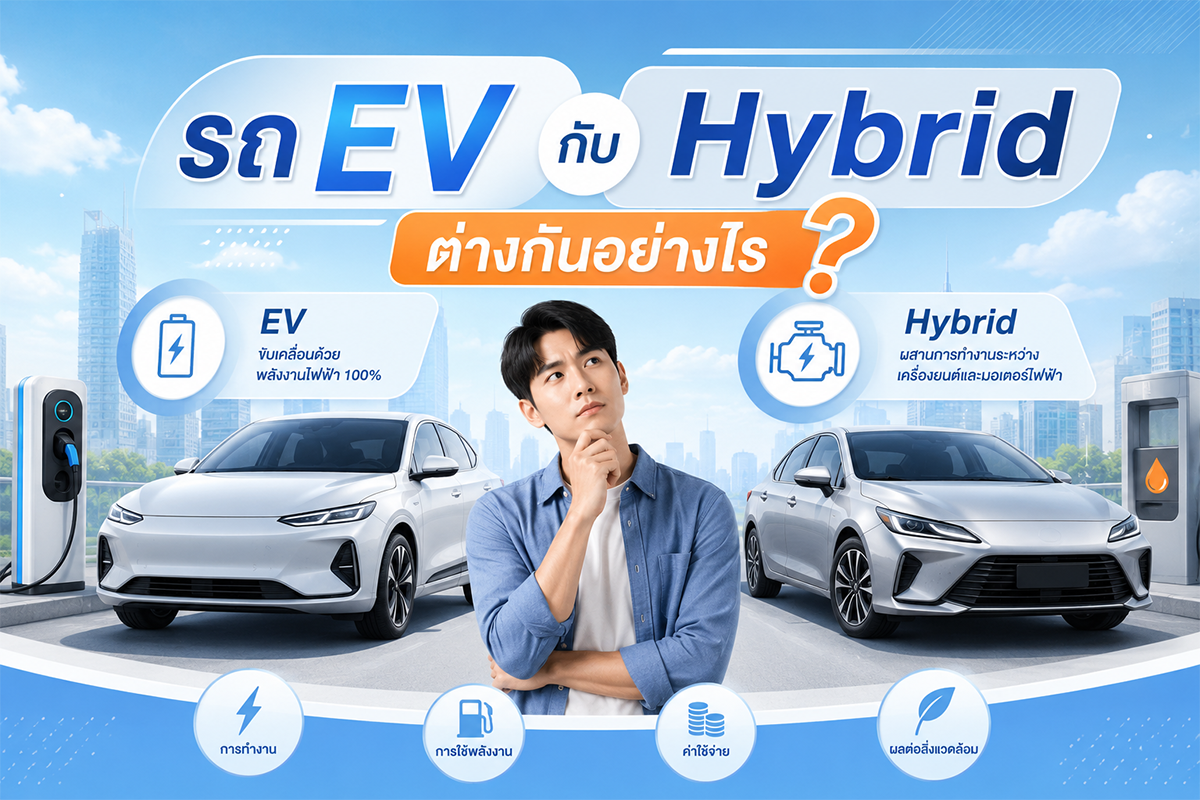
EV vs Hybrid Cars: What's the Difference and Which Is Better for You?
Electric vehicles (EVs) and hybrid cars are becoming increasingly popular among drivers looking to reduce fuel expenses and make more environmentally conscious transportation choices. Both offer advantages over conventional petrol-powered vehicles, but they differ significantly in how they operate, how they are powered, and their overall running costs. For many drivers, the key question is: EV vs Hybrid – which is more economical, and which one is better suited to everyday driving?
The answer depends on several factors, including your driving habits, travel distance, budget, and access to charging facilities. In this guide, KCAR explains the differences between electric and hybrid vehicles, their advantages and limitations, and what to consider before choosing one.
What Is an Electric Vehicle (EV)?
An electric vehicle, or EV, in this article refers specifically to a Battery Electric Vehicle (BEV). It runs entirely on electricity stored in a rechargeable battery and uses an electric motor instead of an internal combustion engine. Unlike conventional petrol or diesel vehicles, a fully electric car does not require fuel. Instead, its battery must be charged using a home charger, workplace charging facility, or public EV charging station.
The driving range of an EV depends on the vehicle model, battery capacity, driving conditions, weather, and individual driving habits.
Advantages of Electric Vehicles
-
Lower energy costs: Charging an EV can cost less per kilometre than purchasing petrol, particularly when using affordable home charging.
-
Reduced routine maintenance: EVs do not require engine oil changes and generally have fewer moving parts in their powertrains.
-
Quiet and smooth driving: Electric motors provide responsive acceleration with minimal engine noise.
-
Zero tailpipe emissions: Fully electric vehicles do not produce exhaust emissions while driving.
-
Environmental benefits: EVs can support corporate sustainability initiatives and efforts to reduce greenhouse gas emissions.
Disadvantages of Electric Vehicles
-
Require access to suitable charging facilities
-
Charging takes longer than refuelling a conventional vehicle
-
Public charging stations may be limited in certain locations
-
Some EV models have higher initial purchase prices
-
Driving range and charging performance vary depending on conditions
What Is a Hybrid Car?
A hybrid vehicle combines an internal combustion engine with an electric motor to improve fuel efficiency. In a conventional Hybrid Electric Vehicle (HEV), the engine and electric motor work together automatically. The battery is recharged through the vehicle's systems, including regenerative braking, meaning drivers do not need to plug the vehicle into an external charger. However, a Plug-in Hybrid Electric Vehicle (PHEV) is different. It has a larger battery that can be charged externally and allows electric-only driving for a limited distance, depending on the model.
Advantages of Hybrid Cars
-
Improved fuel efficiency: The electric motor reduces petrol consumption, particularly in stop-and-go traffic.
-
No external charging required for HEVs: Conventional hybrid cars can be refuelled at regular petrol stations.
-
Convenient for long-distance travel: Drivers can travel without needing to plan EV charging stops.
-
Familiar driving experience: Hybrid vehicles operate much like conventional automatic cars.
-
Greater flexibility: Suitable for drivers without convenient access to charging facilities.
Disadvantages of Hybrid Cars
-
Still consume petrol and produce exhaust emissions
-
Require maintenance of both the combustion engine and hybrid components
-
Continue to incur engine-related maintenance expenses
-
Conventional HEVs have limited electric-only driving capability compared with fully electric vehicles
EV vs Hybrid: Key Differences at a Glance
| Feature | Electric Vehicle (BEV) | Hybrid Vehicle (HEV) |
|---|---|---|
| Power source | Electricity | Petrol and electricity |
| Powertrain | Electric motor | Petrol engine and electric motor |
| Refuelling | Battery charging | Petrol refuelling |
| Tailpipe emissions | None | Produces emissions |
| Routine maintenance | No engine oil changes | Engine maintenance required |
| Long-distance travel | Charging stops may be necessary | Convenient petrol refuelling |
| Best suited for | Drivers with reliable charging access | Drivers seeking flexibility without charging |
EV vs Hybrid: Which Is More Cost-Effective?
When comparing EV and hybrid running costs, electric vehicles generally have the potential to offer lower energy expenses per kilometre, especially when charged at home or at a workplace with favourable electricity rates. However, the actual savings depend on electricity tariffs, petrol prices, vehicle efficiency, and driving conditions. Drivers who regularly rely on public DC fast chargers may face higher electricity costs, reducing the savings compared with hybrid vehicles.
Hybrid cars, on the other hand, can provide better fuel economy than comparable conventional petrol vehicles, particularly in urban traffic where regenerative braking and electric motor assistance are most effective. To determine which option offers better value, consider the total cost of ownership, including:
-
Initial vehicle purchase price
-
Electricity or petrol expenses
-
Insurance premiums
-
Maintenance and servicing
-
Depreciation and resale value
-
Expected ownership period
An EV may be cheaper to operate, but that does not automatically mean it will have the lowest overall ownership cost in every situation.
Should You Choose an EV or a Hybrid?
Choose an EV If You:
-
Primarily drive within the city or follow predictable routes
-
Have convenient charging access at home or work
-
Want to reduce long-term energy expenses
-
Prefer quiet driving and responsive acceleration
-
Want to reduce tailpipe emissions
Choose a Hybrid If You:
-
Frequently travel long distances or between provinces
-
Do not have access to a regular charging point
-
Prefer the convenience of petrol refuelling
-
Want improved fuel efficiency without significantly changing your driving habits
-
Need flexibility for different travel conditions
Renting an EV or Hybrid: An Alternative to Buying
For drivers who are still deciding between an electric vehicle and a hybrid, renting a car can be a practical way to experience different vehicle technologies before making a long-term financial commitment. Renting allows drivers to evaluate everyday convenience, energy consumption, charging requirements, and overall suitability without immediately purchasing a vehicle.
For businesses and organisations, long-term car rental can also provide an alternative to purchasing vehicles outright, helping reduce upfront capital requirements and making fleet expenses easier to plan. Depending on the rental agreement, services such as maintenance coordination, insurance, and vehicle-related administration may also be included. If you need a vehicle for a shorter period, explore KCAR's short-term car rental services.
For individuals, expatriates, or professionals requiring a vehicle for several months, monthly car rental in Bangkok may provide greater flexibility. Businesses planning to operate vehicles over an extended period can also explore long-term car rental services to assess available options. Vehicle availability, including EV and hybrid models, should be confirmed with the rental provider before booking.
FAQ : About EVs and Hybrid Cars
• Is an EV cheaper to run than a hybrid?
In many cases, an EV has lower energy costs per kilometre, particularly when charged at home. However, overall cost-effectiveness depends on electricity prices, petrol prices, maintenance, depreciation, and vehicle purchase costs.
• Do hybrid cars need to be plugged in?
Conventional hybrid vehicles (HEVs) do not require external charging. Their batteries are recharged through the vehicle's operating systems. Plug-in hybrid vehicles (PHEVs), however, can be charged using an external electricity source.
• Are electric cars suitable for long-distance driving?
Yes. Modern EVs can be used for long-distance journeys, but drivers should plan charging stops and consider the vehicle's actual driving range, charging speed, and available charging infrastructure.
• Are EV maintenance costs lower than hybrid maintenance costs?
EVs generally require fewer routine powertrain maintenance procedures because they do not have a conventional combustion engine. However, total maintenance costs still depend on the vehicle model, tyres, suspension, battery condition, and other components.
• Should businesses choose EVs or hybrid vehicles?
EVs may be suitable for businesses with predictable routes and reliable charging facilities. Hybrid vehicles may be more practical for organisations requiring frequent long-distance travel or flexible refuelling options. The best choice depends on operational needs and total fleet costs.
Conclusion: EV or Hybrid – Which Is the Better Choice?
Both electric and hybrid vehicles offer practical benefits, but the right choice depends on how and where you drive. An EV may be the better option if you want lower energy expenses, have convenient access to charging, and mainly travel along predictable routes. A hybrid may be more suitable if you regularly travel long distances and prefer the flexibility of petrol refuelling.
For individuals and organisations that prefer not to purchase vehicles outright, car rental can offer greater flexibility while reducing the need for a substantial upfront investment. Krungthai Car Rent & Lease (KCAR) provides short-term, monthly, and long-term car rental services for individuals, businesses, and organisations in Thailand. With more than 30 years of industry experience, KCAR offers vehicle rental solutions supported by maintenance management, insurance coordination, and 24-hour emergency assistance, subject to applicable rental terms.
Contact KCAR for Car Rental Enquiries
Phone: 02 291 8888, 087 559 1111
LINE Official: @kcar
• Are You a Good Fit for an EV?