
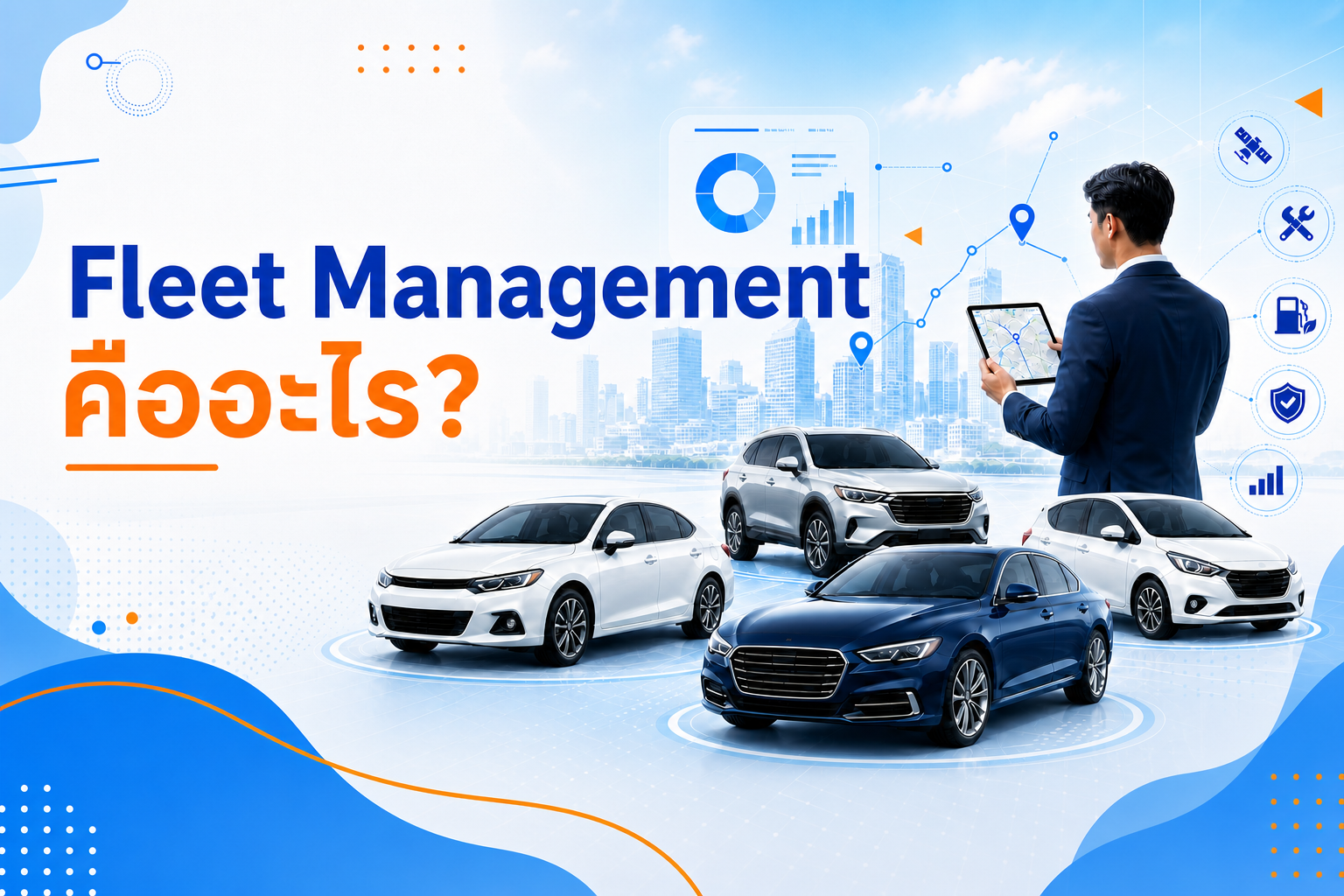
The Problem Businesses With Multiple Vehicles Face
Businesses running five to ten vehicles or more tend to face the same questions every month: Where is each vehicle right now? How much fuel has it used? Is it due for maintenance? Without a central system to pull this information together, fleet coordinators end up calling drivers one by one, or waiting for an end-of-month report that's often already out of date by the time it arrives.
Hidden costs pile up quietly when fleets are managed without a system — vehicles taking longer routes than necessary, engines left idling, or breakdowns happening mid-job. These costs eat into profit margins in ways many organizations don't fully notice. Fleet management is the answer: a way to see the entire fleet's status from a single screen.
What Is Fleet Management?
Fleet management is the systematic administration of a company's vehicles — covering vehicle location tracking, route planning, fuel cost control, driver behavior monitoring, and maintenance scheduling. It typically pulls data from GPS devices and in-vehicle hardware into one central platform, giving fleet managers a single place to monitor every vehicle and make informed decisions.
Core components of fleet management that every business should know:
- Real-time vehicle tracking — know where each vehicle is, whether moving or idle
- Fuel cost control — flag behavior that leads to abnormal fuel consumption
- Preventive maintenance planning — get alerts before a service interval is due
- Driver safety and behavior management — assess driving patterns using real data
The key difference between fleet management and basic GPS tracking is scope: GPS tracking simply shows location and routes, while fleet management takes that data further — using it to manage costs, logistics, safety, and maintenance across the whole operation.
Real Business Benefits of Fleet Management
• More accurate vehicle and job-status tracking
Fleet managers can check vehicle location, trip history, speed, and dwell time at each stop at any moment — making it possible to give customers accurate delivery or job-status updates instead of estimates.
• Lower fuel costs and hidden travel expenses
The system flags wasteful behavior such as prolonged idling, unnecessary speeding, or indirect routes, allowing businesses to plan more efficient routes and adjust driving habits for better cost control.
• Proactive maintenance planning, fewer breakdowns
Automated alerts for mileage- or time-based service intervals — oil changes, tire checks, brake inspections — reduce the risk of a vehicle breaking down mid-job, which affects both emergency repair costs and customer trust.
• Improved driving safety
Data on speed, hard acceleration or braking, and continuous driving time helps organizations spot risk patterns and target driver training where it matters most. That said, this data should always be considered alongside road conditions and real-world circumstances to keep driver evaluations fair.
These benefits only materialize, though, if the vehicles feeding the system are actually available and roadworthy. If vehicles are aging, under-maintained, or simply too few for the workload, even the best tracking system can't fully solve the underlying cost problem.
As a Business Grows, Managing a Fleet In-House Isn't Always the Full Answer
Fleet management gives organizations much clearer visibility — but for many companies, especially those with project-based vehicle needs, growing sales teams, or seasonal spikes that require temporary extra vehicles, the real question isn't just "how do we track our vehicles?" It's "how do we keep our fleet size matched to actual demand, without carrying unnecessary fixed costs?"
This is where long-term vehicle leasing with full-service maintenance support complements a fleet management system well. Beyond knowing where vehicles are and how they're being used, businesses can also scale their fleet up or down as needed, without buying additional vehicles or taking on the maintenance burden themselves.
What to Look for in a Fleet Partner
When weighing options for managing a fleet more efficiently, here are the criteria worth considering — and areas where KCAR, as a long-term corporate vehicle leasing provider, tends to check every box:
- Contract flexibility — adjust vehicle count or lease terms as business needs change
- Comprehensive maintenance service — no need to coordinate with repair shops yourself, since a dedicated team handles it for the life of the contract
- A wide vehicle selection — options suited to different job types, from logistics to sales to field service
- Transparent costs — clear monthly pricing with no hidden fees
KCAR Is Ready to Take Care of Your Fleet
If your business is looking for a way to reduce the burden of fleet management without investing in more vehicles, KCAR (Krungthai Car Rent & Lease) offers long-term corporate vehicle leasing with full maintenance and documentation support throughout the contract term. It keeps your fleet consistently roadworthy and complements the fleet management system you already have in place — freeing your team from having to source or maintain vehicles on their own.
Frequently Asked Questions
Q: Is fleet management worth it for a small business with only a few vehicles?
A: There's no fixed minimum fleet size. If a business is facing fuel cost, tracking, or maintenance issues even with a small number of vehicles, a fleet management system can still improve efficiency.
Q: How is fleet management different from GPS tracking?
A: GPS tracking only shows vehicle location and routes. Fleet management goes further, using that data to manage costs, logistics, safety, and maintenance across the entire operation.
Q: How should a business choose a fleet management system?
A: Start by identifying the specific problem you want to solve, check for the features you actually need, trial the system with real operations before committing, review data security practices, and compare total cost — not just the monthly fee.
Q: How does long-term vehicle leasing help with fleet management?
A: It lets a business scale its fleet size to match actual demand without the cost of buying vehicles or the burden of maintaining them in-house — well suited to businesses whose vehicle needs fluctuate throughout the year.
Q: Is KCAR a good fit for businesses that already use a fleet management system?
A: Yes. KCAR handles vehicle sourcing and maintenance to keep the fleet consistently available, which strengthens the fleet management system a business already uses to track and manage its vehicle data.
Conclusion
Fleet management is a system that helps organizations track vehicles, control fuel costs, plan maintenance, and manage safety using real data. But beyond the system itself, how a business sizes its fleet matters just as much. KCAR, as a long-term corporate vehicle leasing provider with full maintenance and documentation support, is another option that complements fleet management — helping businesses control costs and keep vehicles consistently available over the long term.
Contact us for rental services every day
Tel: 02 291 8888, 087 559 1111
Line: @kcar or click
Why KCAR Long-Term Rental Click here
Request a Callback Click here
Promotions: Click here
2 Days, 1 Night - Where to Go
Renting a Car for a 2-Day, 1-Night Trip Near Bangkok: Where to Go, Plus Budget-Friendly Driving Tips A long weekend of 2 days and 1 night is often prime time for working people who want to escap...
Read More

How to Choose a Car Rental Company
How to Choose a Safe and Reliable Car Rental Company Choosing a reliable car rental company involves more than simply finding the lowest rental rate. Vehicle condition, insurance coverage, renta...
Read More

Who Needs Short-Term Car Rental?
Short-Term Car Rental: A Flexible Solution for Temporary Transportation Needs Many people find themselves in situations where their regular vehicle needs to stay at a service center for several ...
Read More

What Does Rental Car Insurance Cover?
When organizations consider renting vehicles, they typically focus mainly on rental price and vehicle specs. But there's another issue that directly affects risk and budget when the unexpected ...
Read More

What Is Long-Term Car Rental?
Who Is Long-Term Car Rental Suitable For? Comparing the Benefits and What to Know Before Renting Many people are looking for a way to have a car without committing to a 5-7 year car loan, and &q...
Read More

Get to Know Lemon Law
What Is Lemon Law? A New Law Every Vehicle User Should Know Before Buying or Renting a Car Buying or renting a car is a high-value commitment. Everyone expects to receive a quality, road-ready v...
Read More
Monthly Rental, Full Care
Monthly Car Rental: A Cost-Effective Choice for Modern Businesses In an era where businesses need agility in cost management, monthly car rental has become an increasingly popular option —...
Read More